


 For finance
 For delivery

Mastering intercompany transactions with AI-driven automation
- March 6, 2026
- Posted by: Fred Davidson
- Category: Finance

Key takeaways:
- AI-driven automation for intercompany transactions eliminates the manual effort of matching thousands of internal records, allowing finance teams to focus on strategic financial planning and analysis software insights.
- By embedding automation and AI within ERP financial workflows, firms can ensure that every cross-entity charge is automatically balanced and audit-ready from the moment it is recorded.
- AI Copilots act as real-time advisors, identifying anomalies and ensuring financial compliance automation across diverse global tax jurisdictions and currencies.
Table of contents
Intercompany financial transactions are the backbone of global enterprises, particularly in the software services sector. Intercompany transactions refer to financial interactions between entities within the same corporate group, including sales, loans, and asset transfers. As firms scale, the volume of these internal handshakes becomes a massive bottleneck, making AI-driven automation for intercompany transactions a baseline requirement for efficiency.
Accurate accounting of these transactions is crucial for ensuring proper financial reporting and meeting regulatory requirements. However, managing them efficiently and coordinating all the intercompany transactions at the month’s end remains a challenge for many finance teams. This eventually leads to delayed closing cycles.
Why intercompany transactions are complex
Intercompany transactions are critical because they enable seamless operations and financial collaboration within large organizations by facilitating resource sharing, cost allocation, and intra-group trade. The primary cause of complexity lies in the lack of a shared data language; often, two subsidiaries use different charts of accounts or recognize revenue at different times, creating a permanent state of imbalance.
In this environment, AI & ERP integration is essential to bridge the gap between disparate data sets. In a modern environment, AI & ERP integration are needed to help manage all the complexities involved. Technology helps streamline these intercompany transactions which are essential for accurate consolidated financial reporting, regulatory compliance, and ensuring the group operates efficiently as a unified entity.
99% of companies confirmed that they faced significant complexities in intercompany accounting.
– According to a BlackLine study
Risks of manual intercompany accounting
Intercompany financial transactions are challenging due to the complexity of reconciling transactions across multiple legal entities. The risks of manual work are rooted in the “reconciliation tax”; the hundreds of hours wasted by staff manually ticking and tying thousands of lines of data in Excel. Without intercompany accounting automation, firms face a high risk of “one-sided” entries where one entity records an expense that the other never picks up as revenue, leading to massive variances during consolidation. Finance teams must ensure compliance with local and international regulations, managing foreign exchange and multi-currency environments, and maintaining audit transparency.
Additionally, process inconsistencies and high transaction volumes can create inefficiencies. This makes financial compliance automation indispensable for managing these transactions effectively.
How AI improves accuracy and compliance
To overcome intercompany financial transaction complexity, leading finance teams are embracing intelligent automation by combining standardized workflows with AI-driven insights. By utilizing AI Copilots, teams can instantly identify the root cause of an imbalance, such as a currency rounding error or a missing project code, without digging through spreadsheets. This approach streamlines reconciliations, flags exceptions proactively, and ensures compliance across currencies, geographies, and entities.
Platforms like the Microsoft Industry Cloud for Software Services Firms build on this foundation by integrating automation and AI within a connected data framework to deliver faster, more accurate, and audit-ready intercompany transactions.
How does the Microsoft Industry Cloud for Software Services Firms simplify intercompany transactions?
The Microsoft Industry Cloud for Software Services Firms, by sa.global, addresses the intercompany accounting challenges head-on with a solution that leverages automation, AI-driven insights, and a connected data framework. By embedding ai-driven automation for intercompany transactions directly into ERP financial workflows, software services organizations can address accounting challenges head-on. This integrated approach not only eliminates data silos but also accelerates intercompany transactions with AI, ensuring that all financial transactions information is both accurate and up to date.
Purpose-built for software services organizations, the platform simplifies the creation and management of new subsidiaries and business units, providing a macro-level view of financial performance across all entities. It leverages advanced transaction automation and AI technologies to transform complex intercompany transaction processes. With automated intercompany transactions, finance teams can dramatically reduce the manual process of reconciling internal transaction efforts and mitigate financial risks. The platform also provides comprehensive visibility into cross-entity financial performance, allowing leadership to identify potential revenue leakage, ensure regulatory compliance, and make data-driven strategic decisions. Beyond operational efficiency, this unified approach enables software services firms to accelerate growth, optimize cash flow, and maintain a competitive edge by turning financial complexity into a strategic advantage.
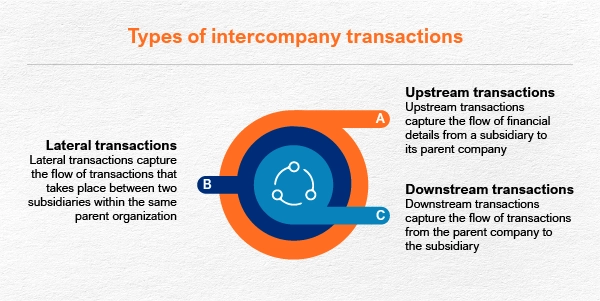
Here are seven ways with which the Microsoft Industry Cloud for Software Services Firms brings in efficiency in intercompany transactions through automation and AI:
Centralized ERP systems: A centralized ERP system makes managing intercompany transactions easier and more efficient. One of the biggest benefits of a centralized ERP is that it enables automating intercompany accounts reconciliation, which speeds up financial consolidation by removing duplicate entries and manual adjustments. With real-time visibility into financial data across multiple entities, finance teams can track intercompany charges, revenue sharing, and shared costs without hassle. The Microsoft Industry Cloud for Software Services also helps ensure compliance with tax, currency, and regulatory requirements, reducing legal risks. By streamlining financial workflows and providing industry-specific insights, businesses can improve accuracy, make better decisions, and scale smoothly in a cloud-based environment.
Streamlining intercompany reconciliation: Software services firms manage complex intercompany accounting processes due to global operations, shared service costs, and multi-entity revenue streams. Manual reconciliation often leads to delays, discrepancies, and compliance risks, making financial closing a time-consuming process. Automation and AI-powered intercompany accounting reconciliation address these challenges by ensuring accurate transaction matching, reducing manual effort, and speeding up consolidation.
For firms handling subscription-based revenues, software licensing, or cross-border service delivery, AI-powered transaction matching identifies inconsistencies in invoices, cost allocations, internal transactions and revenue-sharing agreements across multiple entities. Rules-based intercompany accounting automation enforces standardized policies, ensuring that intercompany charges, payroll allocations, and tax deductions follow local and international compliance standards.
Transparent audit trails provide full visibility into intercompany accounting settlements, making audits smoother and reducing the risk of financial misstatements. By automating intercompany accounting transactions, software services firms can eliminate reconciliation bottlenecks, improve financial accuracy, and close books faster, even as they scale operations globally.
Standardized intercompany agreements and transfer pricing: For software services firms operating globally, maintaining consistent intercompany agreements is essential to avoid tax penalties and compliance risks. Standardized agreements set clear rules for pricing and cost allocations across all subsidiaries. This consistency simplifies financial processes, reduces the chance of discrepancies, and ultimately lowers tax exposure and regulatory scrutiny.
Automated tax compliance tools further support these efforts by handling VAT, sales tax, and transfer pricing with minimal manual intervention. These tools automatically adjust to regulatory changes, ensuring that all intercompany transactions are compliant with local and international laws. Together, standardized agreements and automated tax solutions help software services firms mitigate risks, streamline their operations, and focus on driving business growth.
Multi-currency and foreign exchange management: Accurate currency conversion is crucial for software services firms operating internationally. Automated multi-currency tools handle conversions for every financial transaction, ensuring that sales, expenses, and intercompany transfers are recorded correctly in the home currency. The automation not only reduces manual errors but also provides a consistent financial view across different regions.
Real-time foreign exchange (FX) rate integration further strengthens financial accuracy by constantly updating exchange rates through reliable third-party providers. Consequently, firms always work with the most current market data, allowing for precise valuation of transactions and better decision-making. Together, these features simplify the complexities of global operations, ensuring that financial reporting remains accurate and reliable.
Intercompany billing and invoice automation: Intercompany billing and invoicing automation leverages advanced technology to streamline internal transactions, including intercompany accounts receivable and payable. The system automatically generates invoices with precise tax calculations and seamless general ledger (GL) coding across multiple entities, reducing manual data entry and errors.
By automating intercompany accounts receivable and payable, businesses can speed up the payment cycle, accelerate financial close, and significantly lower operational costs, freeing finance teams to focus on strategic tasks rather than routine reconciliations.
A key strength of the platform is its robust invoice collaboration capability. As invoices are processed, the system flags discrepancies immediately. On the other hand, the compliant invoices move directly to the approval queue. This process ensures that only accurate invoices proceed, minimizing disputes and delays.
The platform also enables real-time collaboration between finance and project delivery teams, allowing them to collaborate on reviewing and resolving flagged issues. Once discrepancies have been addressed, invoices seamlessly rejoin the approval workflow. Additionally, built-in AI checks each invoice against the contractual terms and conditions, ensuring full compliance. This intelligent verification reduces the risk of non-compliance and contractual disputes, ultimately building trust and transparency across the organization.
Unified financial reporting and real-time insights: Managing finances across different teams and projects can be complex for software services firms. The Microsoft Industry Cloud for Software Services Firms brings all your financial transaction data together, offering a clear and unified view. With Microsoft Dynamics 365 Finance consolidation tools, the system automatically removes duplicate entries, ensuring that you have clean, accurate data to work from. This allows a clear financial picture, making it easier to plan budgets and make smart business decisions.
The solution also uses Microsoft Power BI dashboards to turn raw data into simple charts and graphs, giving real-time insights into your firm’s performance. AI-driven insights help by analyzing past and current data to spot trends and risks early on. Your finance team can quickly address potential issues and take advantage of new opportunities, keeping your firm agile and competitive in a fast-changing market.
Future-proof financial operations: Cloud-based integration is a game changer for software services firms looking to grow globally. The Microsoft Industry Cloud for Software Services Firms leverages Microsoft Azure and Dynamics 365 Finance to provide secure, global access to financial systems. Your teams can access real-time data from anywhere, ensuring that your financial operations remain smooth and secure, no matter where you are. The cloud-based approach also helps lower IT costs by eliminating the need for heavy on-premises infrastructure, allowing your firm to expand without a significant increase in overhead.
The solution also features APIs and third-party tool integrations, connecting your financial data seamlessly with other systems such as project management, billing, and HR. This interconnected ecosystem makes managing intercompany transactions and overall financial operations a whole lot easier. A scalable framework supports growth, whether you are expanding organically or through acquisitions, so your financial systems evolve with your business. By using these cloud-based tools, software services firms can turn the complexity of intercompany transactions into a strategic advantage, boosting accuracy, compliance, and overall operational efficiency at scale.
Business impact: Efficiency, accuracy, and governance
By integrating automation with AI, organizations can go beyond process efficiency to achieve smarter, more scalable intercompany operations. For software services firms in particular, the combined impact delivers a range of strategic and operational benefits that include:
- Reduces manual effort and errors: Automating intercompany transactions streamlines financial processes between related entities, significantly reducing manual effort and human error while ensuring consistent application of accounting standards. This leads to faster period closes, improved audit trails, and better regulatory compliance across global operations.
- Provides real-time visibility: Automation also enables real-time financial visibility, allowing leadership to make more informed decisions based on accurate, consolidated data.
- Helps manage complex structures: For software services firms specifically, automation is particularly valuable due to the complex ecosystem of subsidiaries, international operations, and project-based billing structures. These firms often deal with intricate revenue recognition scenarios, transfer pricing requirements, and intellectual property licensing between entities. Intelligent automation helps handle these nuances while maintaining consistency in service delivery costs, resource allocation tracking, and profit margins across organizational boundaries—critical factors in accurately measuring performance and optimizing global tax positions.
- Early anomaly detection and predictive insights: Machine learning systems automatically highlight anomalies, identify root causes and proactively suggest corrective actions. They also learn from historical patterns to improve intercompany cash flow forecasting and settlement planning.
Accelerate growth by simplifying intercompany transactions with AI and automation
In the fast-changing world of software services, intercompany transactions do more than just record numbers—they drive growth and keep your business agile. The Microsoft Industry Cloud for Software Services Firms makes managing these transactions simple. With AI-driven automation and connected data, this cloud solution speeds up reconciliations, ensures compliance, and provides real-time financial transaction insights across your entire organization.
This approach helps you close the books faster, manage different currencies easily, share costs effectively, and expand into new markets. In short, the Microsoft Industry Cloud makes intercompany management easier so you can focus on growing your business.
FAQs
· Why are intercompany transactions difficult to manage manually?
AI enhances intercompany workflows by analyzing historical transaction data to identify patterns, automate reconciliations, detect anomalies, and flag exceptions in real time. It reduces manual intervention, accelerates approvals, and ensures transactions are consistently classified and processed across entities.
What are the first steps in adopting AI-powered automation for intercompany transactions?
Start by identifying repetitive and error-prone intercompany processes—such as reconciliations, allocations, and approvals. Then, integrate automation tools with your existing ERP or financial systems, and layer in AI capabilities to handle exception management, data mapping, and intelligent recommendations.
Can AI enhance the automation of both financial and internal intercompany transactions?
While automation handles the execution of repetitive tasks, AI adds intelligence by identifying patterns, flagging anomalies, and making contextual decisions. This enables more effective automation of both financial transactions (like billing, settlements, and allocations) and internal ones (such as time tracking) across entities.
How does AI help manage intercompany compliance and audits?
AI helps maintain compliance by ensuring consistent application of accounting standards, automatically logging every transaction with audit trails, and flagging any deviations from regulatory or internal policies. It can also simulate audit scenarios and generate documentation to support audit readiness.
What are examples of intercompany tasks AI can handle automatically?
Some of the examples include, matching and reconciling intercompany invoices, allocating shared service costs across entities, predicting settlement timelines based on past data, detecting pricing discrepancies in transfer pricing, flagging non-compliant journal entries.
Are AI-driven intercompany transactions secure and accurate?
AI systems follow enterprise-grade security protocols and are designed to operate within regulated environments. Accuracy improves over time as AI models learn from corrections and transaction patterns, while human oversight ensures accountability in critical processes.
How does AI deal with multi-entity and multi-currency environments in intercompany operations?
AI normalizes data across different entities, applies appropriate exchange rates, and ensures compliance with local accounting rules. It can also detect inconsistencies caused by currency fluctuations and automatically adjust entries for accurate consolidated reporting. This applies to both intercompany and internal transactions, ensuring unified financial statements across the board.

Fred Davidson
Fred Davidson is a seasoned marketing professional with deep expertise in demand generation, brand strategy, and revenue marketing for software services firms. With nearly twelve years of experience driving growth across global markets, he combines data-driven precision with creative storytelling to align marketing, sales, and delivery. Fred is passionate about building connected campaigns that accelerate pipeline, strengthen positioning, and deliver predictable growth.
Contact us at info@saglobal.com
Or submit an inquiry online – our experts will reach out to you soon.